
- Exhibitions, Permanent exhibitions
Aalto Works – Unesco World Heritage
- Aika 18.03.2026
- 31.12.2034
At the Visitor Centre exhibition, visitors can explore the history, architecture and significance of the World Heritage sites through engaging and immersive content. The aim is to spark curiosity and inspire visitors to experience the sites in their original settings.

Aalto Works – UNESCO World Heritage Visitor Centre at the Aalto2 Museum Centre introduces visitors to Alvar Aalto’s architecture and the World Heritage of Central Finland. The exhibition presents the Aalto Works World Heritage property alongside other significant cultural heritage sites in the region, while providing a starting point for exploring and experiencing them in person.
At the heart of the exhibition is Aalto Works, a UNESCO World Heritage property comprising thirteen sites designed by Alvar Aalto’s architectural practice. Located across Finland, these buildings offer an insight into the development of Aalto’s architecture and the work of his practice. At the same time, they tell the story of the modernisation of Finnish society and of how architecture was used to create environments that support human well-being in everyday life, work, culture and leisure.
Particular attention is given to the World Heritage sites in and around Jyväskylä: the Aalto Campus at the University of Jyväskylä’s Seminaarinmäki, Säynätsalo Town Hall and the Muuratsalo Experimental House. These three very different sites illuminate Aalto’s design from distinct perspectives. The campus forms an extensive environment centred around education and community; Säynätsalo Town Hall is one of Aalto’s best-known public buildings; and the Muuratsalo Experimental House was Aalto’s own place for experimentation, where he explored materials, forms and approaches to construction, among other things.
Jyväskylä’s significance as a city of Aalto architecture extends well beyond its World Heritage sites. The city is home to a total of 28 buildings designed by Alvar Aalto’s architectural practice. The exhibition also highlights these sites and encourages visitors to see the familiar urban environment from a new perspective. In Jyväskylä, Aalto’s architecture can be encountered in the city centre, on the university campus and throughout the surrounding area.
"Everyone knows that sometimes, the closer a place is to home, the harder it can be to actually go and visit it. The Visitor Centre reminds people in Central Finland that the buildings designed by Alvar Aalto’s architectural practice are works of architecture of international significance. We know that Aalto’s architecture can evoke a wide range of associations and emotions. That is all the more reason to come and experience it for yourself – and form your own opinion."
Laura-Kristiina Moilanen
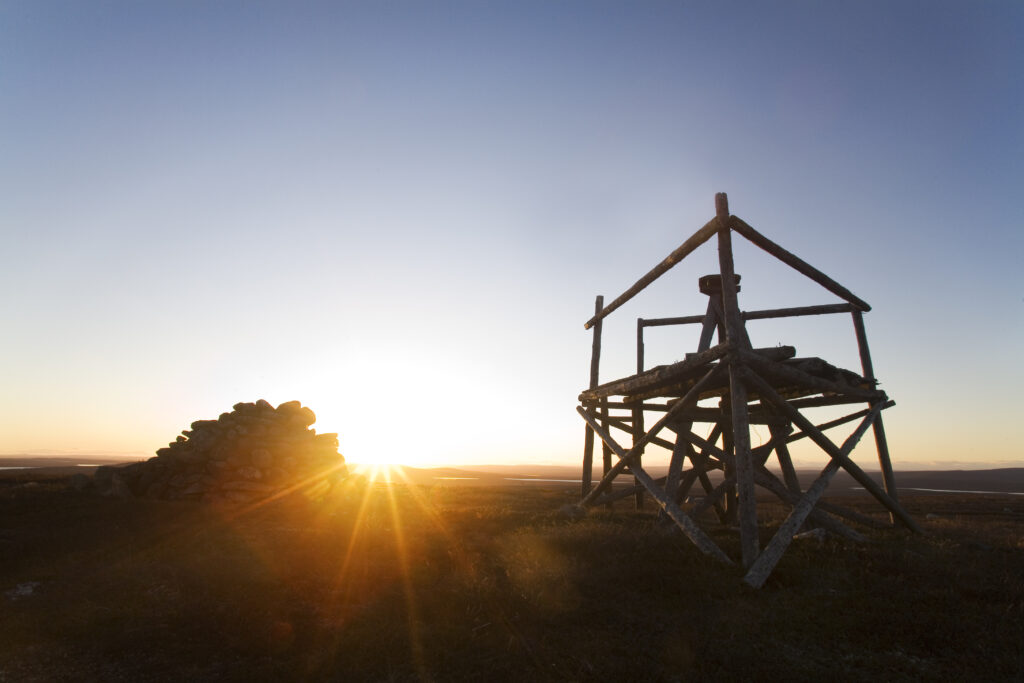
Alongside Aalto’s architecture, the exhibition also explores other World Heritage in Central Finland. It features Petäjävesi Old Church and the Oravivuori triangulation point in Korpilahti, which forms part of the Struve Geodetic Arc. These sites demonstrate the diversity of World Heritage: valuable cultural heritage can take the form of architecture and centuries-old building traditions, as well as a scientific survey point surrounded by nature.
Petäjävesi Old Church represents Nordic wooden church architecture and the Finnish tradition of log construction. Built by local master craftsmen, the church combines influences from European ecclesiastical architecture with Finnish expertise in timber construction. It reflects building skills passed down from generation to generation and given their own distinctive form in the hands of local craftspeople.
The Struve Geodetic Arc, in turn, offers a window into the history of science and technology. The Arc was established to determine the size and shape of the Earth and stretches across Europe from the Arctic Ocean to the Black Sea. One of its protected survey points is located at Oravivuori in Korpilahti. The site is a reminder of international scientific collaboration and humanity’s long-standing endeavour to understand and measure the world around us.
The exhibition also explores Finnish sauna culture, which is inscribed on UNESCO’s list of Intangible Cultural Heritage. Central Finland’s diverse sauna sites bring the perspective of living cultural heritage to the exhibition. While buildings and historic sites represent tangible cultural heritage, sauna culture lives on in customs, knowledge, skills and shared traditions.
The exhibition thus brings together different perspectives on World Heritage under one roof: modern architecture, traditional timber construction, the history of science and living cultural heritage. At the same time, it invites visitors to consider why certain buildings, places and traditions come to be recognised as a shared heritage of international significance, and why preserving them for future generations matters.
The Visitor Centre exhibition does not, however, present these sites simply as attractions to be viewed from afar. Its purpose is to spark curiosity about the cultural heritage that surrounds us and to encourage visitors to continue their journey from the exhibition to the sites themselves. In Central Finland, World Heritage is closer than many might realise: it can be found in buildings, landscapes and traditions that remain part of everyday life today.
Inquiries:
Laura-Kristiina Moilanen
Producer
laura-kristiina.moilanen@jyvaskyla.fi
+358 40 623 7171
Katso muut näyttelyt


- 13.06.2026
- 15.11.2026